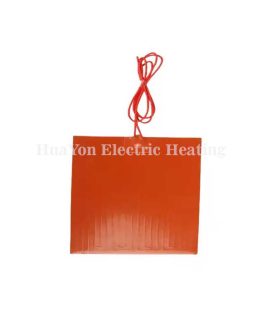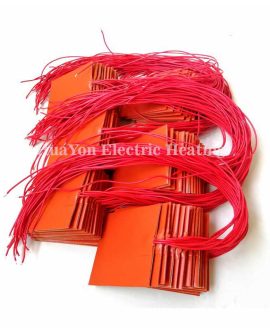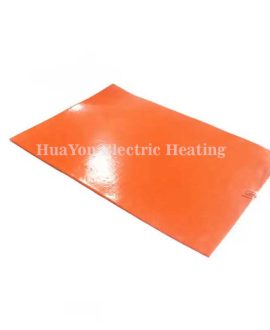
Silicone Rubber Heater for Chemical Processing Quick Detail
Applicable Industries: medicine and healthcare, aerospace and aviation, Automotive industry, Consumer electronics
state: New
Type: electric heater
Birthplace:Anhui, China
brand name: HuaYon customize it
Dimension (L*W*H): personalized
Voltage: 3,7 ~ 480 V
1 one year warranty
Working temperature range: -30~200ºC
Material: Silicone rubber + engraved metal sheet
Thickness: 1,5-3 mm
Back adhesive: 3M 467/468 the personalized
Power density: 0,01-2,5 w/cm²
Power deviation: ±5%
Supply capacity: 50000 units per month
Packaging Details: inner PE bag + card
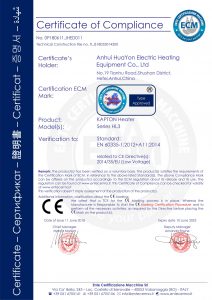
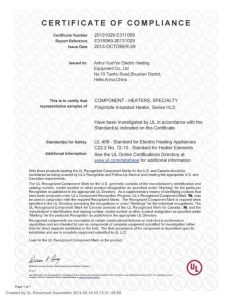
Certificates: THIS, RoHS, ISO9001
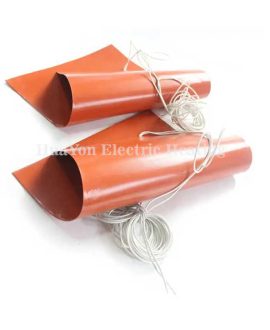
Silicone rubber heater is a type of thin film that heats up when electrified, in a standard thickness of 1.5 mm, Adopting nickel-chromium wires or nickel-chromium foils from 0.05 mm ~ 0.10 mm thick engraved in certain shapes, the heating component is wrapped with heat conductors and insulating materials on both sides, and completed in high temperature die forming and aging heat treatment.
Voltage | 3V-480V | Thickness | 1.5mm-3mm |
Power Density | 0.1-1.2W/CM2 | Insulation Ohm | More than 5MΩ |
Min Size | 10*10mm | Max Temperature | 250 degree |
Max Size | 2000*10000mm | Wire Tension | 15N*15N |
What is silicone rubber heater?
Freeze protection and condensation prevention for many types of instrumentation and equipment.
Medical equipment such as blood analyzers and test tube warmers.
Computer peripherals such as laser printers.
Curing of plastic laminates.
Photo Processing Equipment.
Semiconductor Processing Equipment.
Thermal transfer equipment
Drums and other containers and viscosity control and asphalt storage.
Key features and benefits of silicone rubber heaters include:
Flexibility: The flexibility of silicone rubber allows for molding, bend or mold these heaters to fit various shapes and surfaces. This feature makes them suitable for applications where rigid heaters are not practical..
Uniform heating: These heaters distribute heat evenly across their entire surface., mitigating the appearance of hot spots or cold regions and ensuring constant heating.
Quick response to heating: Silicone rubber heaters are known for their fast response times in reaching and adjusting temperatures., making them suitable for applications requiring rapid heating adjustments.
Durability: silicone rubber is resistant to various environmental factors, like humidity, chemicals and moderate physical wear, which improves the robustness of the heater.
Electrical isolation: The electrical insulating properties of silicone rubber ensure safe use in applications where electrical insulation is vital.
Customizable layout: Manufacturers can customize silicone rubber heaters in terms of size, form, power and temperature distribution to meet specific heating requirements.
Silicone rubber heaters are used in a wide spectrum of industries and applications, including:
Industrial processes: Heat tanks, pipelines, valves and manufacturing equipment, and assist in curing operations, drying and preheating.
Medical devices: They are used in medical equipment as IV bag warmers, heated patient warmers and medical imaging tables.
Aerospace and aviation: preventing ice buildup on aircraft components by deicing critical areas such as wings.
Food and beverage industry: maintenance of specific temperatures in food processing equipment, such as boilers and tanks, during production processes.
electronics: Integration in electronic cabinets, display panels and other devices for temperature regulation.
Automotive section: Used in seat heating applications, defrosting windows and preheating engines in vehicles.
A silicone rubber heater for chemical processing is a type of flexible heater used to maintain or raise temperatures in various industrial applications., particularly where precise temperature control is essential. Below are some key aspects of silicone rubber heaters and their use in chemical processing:
Features of silicone rubber heaters
Flexible and durable: Made from a flexible silicone rubber material, These heaters can adapt to the shape of the equipment they heat. Silicone material is moisture resistant, chemicals and high temperatures, making it very durable in harsh environments.
Uniform heating: Silicone rubber heaters provide even heat distribution across their entire surface, which is essential for maintaining constant temperature in chemical processing applications.
Customizable: These heaters can be custom designed to fit specific equipment and applications, including various shapes, sizes and watt densities. They may also include features such as built-in thermostats, thermocouples or RTD (resistance temperature detectors) for precise temperature control.
Efficient heating: They offer efficient heat transfer and can quickly reach the desired temperature, which is important for processes that require rapid heating and cooling cycles.
Applications in chemical processing
Tanks and containers: Silicone rubber heaters are commonly used to heat tanks and vessels that store or process chemicals. Maintaining the correct temperature is crucial for reactions, dissolving or preventing crystallization.
Pipes and tubes: They can be wrapped around pipes and tubes to prevent freezing, maintain fluid viscosity or ensure that chemical reactions occur at the desired temperature.
Equipment heating: in chemical processing plants, Various equipment may need to be heated, like bombs, valves and reactors, to function properly or maintain process efficiency.
Laboratory use: in chemical laboratories, Silicone rubber heaters can be used to heat samples, flasks or other laboratory apparatus to ensure accurate experimental conditions.
Benefits
Chemical resistance: Silicone material is resistant to many chemicals, making these heaters suitable for environments where they may be exposed to corrosive substances.
Security: Silicone rubber heaters are designed to operate safely in hazardous environments. Can be manufactured to meet various safety standards, including those in explosion-proof areas.
Temperature control: With integrated temperature sensors, These heaters provide precise and reliable temperature control, which is essential to maintain the integrity of the process.
Installation and maintenance
Easy installation: Silicone rubber heaters are typically easy to install due to their flexibility and can be secured with adhesives, straps or mechanical fasteners.
Low maintenance: Once installed, require minimal maintenance, which contributes to its profitability over time.
In summary, Silicone rubber heaters are versatile solutions, reliable and efficient for maintaining and controlling temperatures in chemical processing applications. Their ability to withstand harsh conditions and provide uniform heating makes them ideal for ensuring consistent and safe chemical processing operations.